Food Stories
Blood Orange
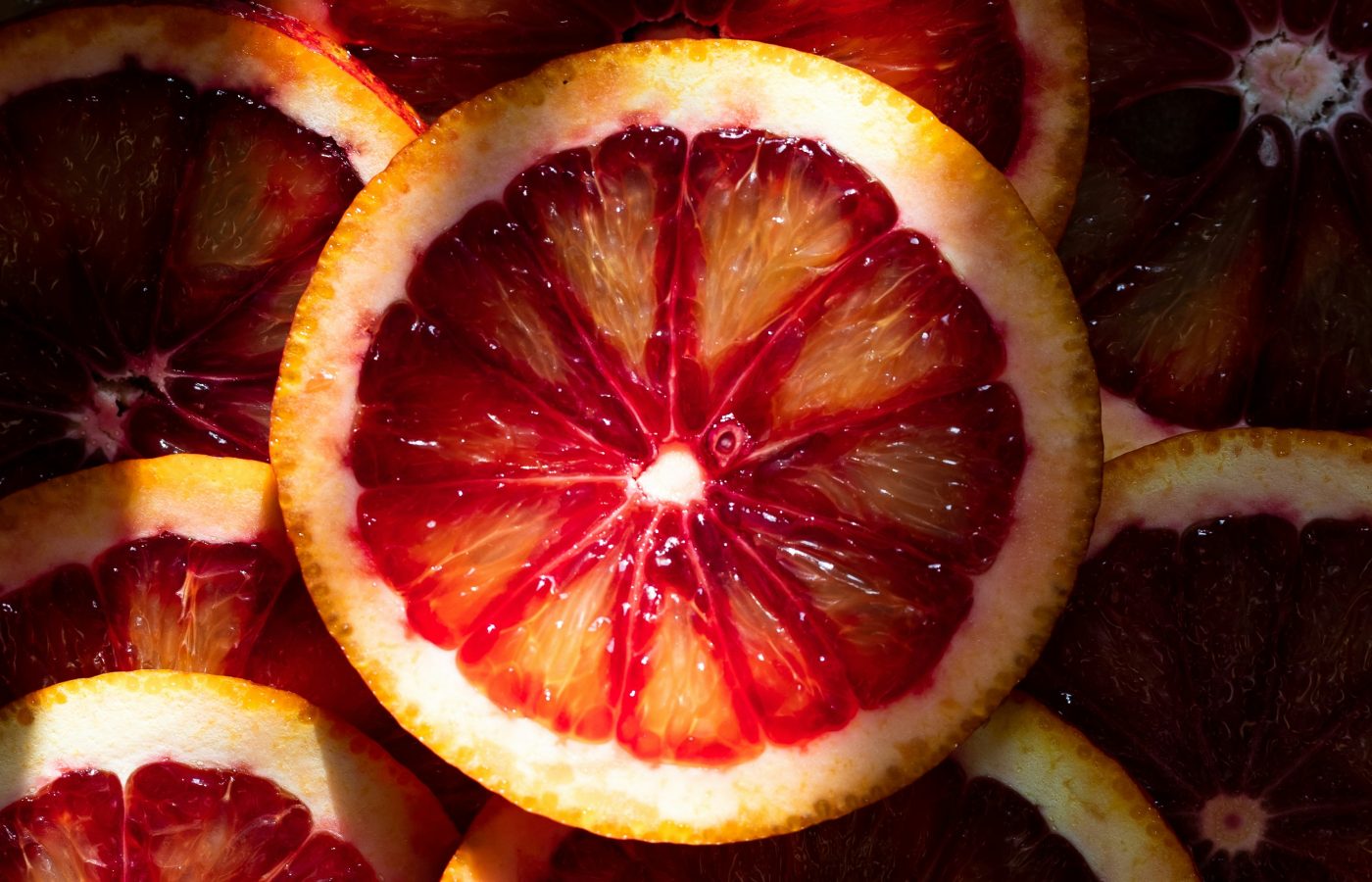
It looks like an orange and smells like an orange — until you cut one open and find a secret red heart. Meet the citrus fruit that coloured Mummy's sorbet at Bastani.
🍊 Citrus · ❤️ Secret red heart · 🇮🇹 Mediterranean · 🧪 Plant pigments
It looks like an orange. It smells like an orange. It even has an orange peel. But cut one open and you might discover something surprising: red flesh. This is the blood orange — one of the most dramatic fruits in the citrus family, and the one that helped make Mummy’s sorbet at Ice Cream Parlor Bastani so bright, sharp and beautiful.
🍊 Meet the blood orange
A blood orange is a variety of sweet orange with flesh that can be 🍊 pale orange, ❤️ streaked with red, or 🍷 deep crimson. The colour isn’t food colouring — it comes from natural plant pigments called anthocyanins, the same pigments that can make blueberries, cherries, blackberries and dark grapes look red, purple or blue. So a blood orange isn’t a different fruit family altogether. It’s still an orange — it simply has a colourful secret.
👀 Why are some blood oranges redder than others?
Not every blood orange looks the same: some have only a few red streaks, others are almost completely dark red inside. The colour can depend on 🍊 the variety, 🌡️ the temperature where it grows, ☀️ the growing conditions and ⏳ how ripe the fruit is. Cool nights can help some blood oranges develop more anthocyanins, so the same kind of fruit may look different depending on where and how it grows. A blood orange is therefore partly a fruit and partly a record of its growing conditions.
🧪 Kitchen Science · Nori
What are anthocyanins?
Anthocyanins are colourful molecules made by plants, which use many different pigments to create colour: 🍃 chlorophyll makes leaves green, 🥕 carotenoids help make carrots orange, 🍅 lycopene helps make tomatoes red, and 🫐 anthocyanins can make fruits red, purple or blue. Anthocyanins can also change colour depending on acidity, which means the same pigment may look different in different foods or mixtures. In a blood orange, they help create the deep red colour that makes the fruit so unusual.
🍋 Why does blood orange taste different?
Blood oranges are usually sweet and juicy, but they can have a more complex flavour than ordinary oranges. You might notice 🍊 orange sweetness, 🍋 citrus sharpness, 🍓 berry-like notes and 🌿 a slightly bitter finish. That’s why blood orange sorbet can taste both refreshing and rich. And before we even take a bite, the colour has already started telling our brains a story — our eyes and our taste buds work together.
👅 Taste like a food critic
Compare two oranges
If you have an ordinary orange and a blood orange, taste them side by side. Look for: 👀 colour — how different is the flesh? 👃 aroma — do they smell exactly the same? 👅 sweetness — which tastes sweeter? 🍋 acidity — which tastes sharper? 🌿 bitterness — can you notice a bitter edge? 🥄 juiciness — which releases more juice?
There may not be one correct answer — fruit can taste different depending on variety, ripeness and growing conditions. The important thing is to observe carefully and explain what you notice.
🔬 Nori’s Colour Experiment · Nori
Can you make the colour change?
You can investigate anthocyanins using red cabbage, which contains anthocyanin pigments too. Ask an adult to help you make a small amount of red-cabbage water by soaking or gently heating chopped red cabbage in water, then divide it between several clear cups. Add a little of a different ingredient to each: 💧 plain water, 🍋 lemon juice, and 🥄 bicarbonate of soda mixed with water. What happens to the colours? Acids and alkalis can change the way anthocyanin pigments look. This isn’t exactly what happens inside a blood orange, but it helps us investigate the chemistry of plant colour.
Important: this is a science experiment, not a drink — don’t taste the mixtures.
🌱 Where do blood oranges grow?
Blood oranges grow best in warm citrus-growing regions, and are especially associated with the Mediterranean — including 🇮🇹 Italy, 🇪🇸 Spain and 🇬🇷 Greece. They can also grow elsewhere where the climate suits them. The fruit needs warmth and sunlight, but cooler conditions can help some varieties develop their red colour. That makes blood oranges a useful reminder that geography affects food: where a fruit grows can influence its flavour, its colour, its harvest time and the way people use it.

🗺️ Geography Stop · Bamboo & Twig
Follow the citrus trail
Start with our sorbet in 🇳🇱 Eindhoven, in the Netherlands. Now travel south towards the Mediterranean and find 🇮🇹 Italy — then look for the island of Sicily, where blood oranges are especially famous. Sicily is surrounded by the Mediterranean Sea and has a warm climate well suited to citrus growing. One scoop of sorbet has taken us from the Netherlands to an island at the southern edge of Europe.
🧺 How do people use blood oranges?
Blood oranges can be eaten in many ways — 🍊 fresh fruit salads, 🥗 savoury salads, 🧃 juice, 🍰 cakes and desserts, 🍧 sorbet, 🍯 marmalade and 🥤 drinks. Their colour makes them especially useful when people want a dish to look dramatic as well as taste delicious. A slice of blood orange can turn an ordinary plate into something that looks like a sunset.

🍊 Ingredient Detective · Kombu
Why is it called a blood orange?
The name comes from the fruit’s red colour — it doesn’t mean the fruit contains blood! The dark red flesh simply reminded people of blood, so the name became part of the fruit’s identity. Some people prefer the name red orange, but “blood orange” is the name most commonly used in English. It’s a slightly surprising name for a fruit — and that’s part of why it’s so memorable.

🔢 Maths Mission · Sunny
Count the colours
Cut open several blood oranges and record what you see. For each fruit, count how many pieces are 🟠 mostly orange, ❤️ partly red, or 🍷 mostly dark red. Make a table, then turn it into a bar chart. Do all the oranges look the same? If not, what might explain the differences? You could compare fruit from different shops or different varieties — that’s how a simple snack becomes a small scientific survey.
🧊 From fruit to sorbet
Blood orange sorbet usually combines blood orange juice or purée, water and sugar. The juice provides the flavour, colour and acidity; the sugar adds sweetness and helps control the texture as the mixture freezes; and the water becomes ice crystals, which churning helps keep small while spreading the flavour through the mixture. The result is cold, smooth, bright and refreshing — which is why blood orange worked so well beside rich chocolate and tropical mango. It brought a completely different kind of flavour to the tasting.
⭐ Rachel’s blood orange verdict
Blood orange wasn’t the winner of our ice-cream competition — that honour went to 🍫 chocolate. But blood orange sorbet was still bright, fruity, refreshing and beautifully coloured: a very strong citrus contender. And it gave us a much bigger question to investigate: how can one orange become red inside? The answer took us to plant pigments, Mediterranean geography, acidity and the science of colour.
🏅 Blood orange badges
🧾 Our ingredient log
- Ingredient: Blood orange
- Food family: Citrus fruit
- Special feature: Red or crimson flesh
- Colour molecules: Anthocyanins
- Flavour: Sweet, sharp, juicy and sometimes berry-like
- Often associated with: The Mediterranean
- We tried it as: Sorbet
- Would we try it again? Yes!
🚀 Where could this ingredient take us next?
One little fruit has taken us from a sorbet in the Netherlands all the way to a sunlit island in the Mediterranean, through plant pigments, acidity and the science of colour. There are plenty of trails to follow: we could juice our own oranges, grow anthocyanins in the kitchen with red cabbage, discover other Mediterranean citrus, or find out why the same pigment can look red in one food and purple in another.