Food Stories
Ramen
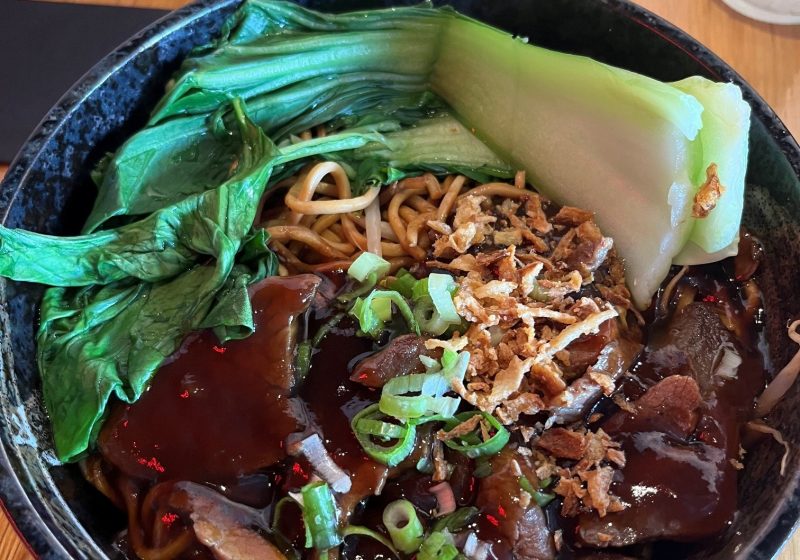
It looks like noodles in soup. But a proper bowl of ramen is one of the most carefully built foods in the world — and we met one in Eindhoven.
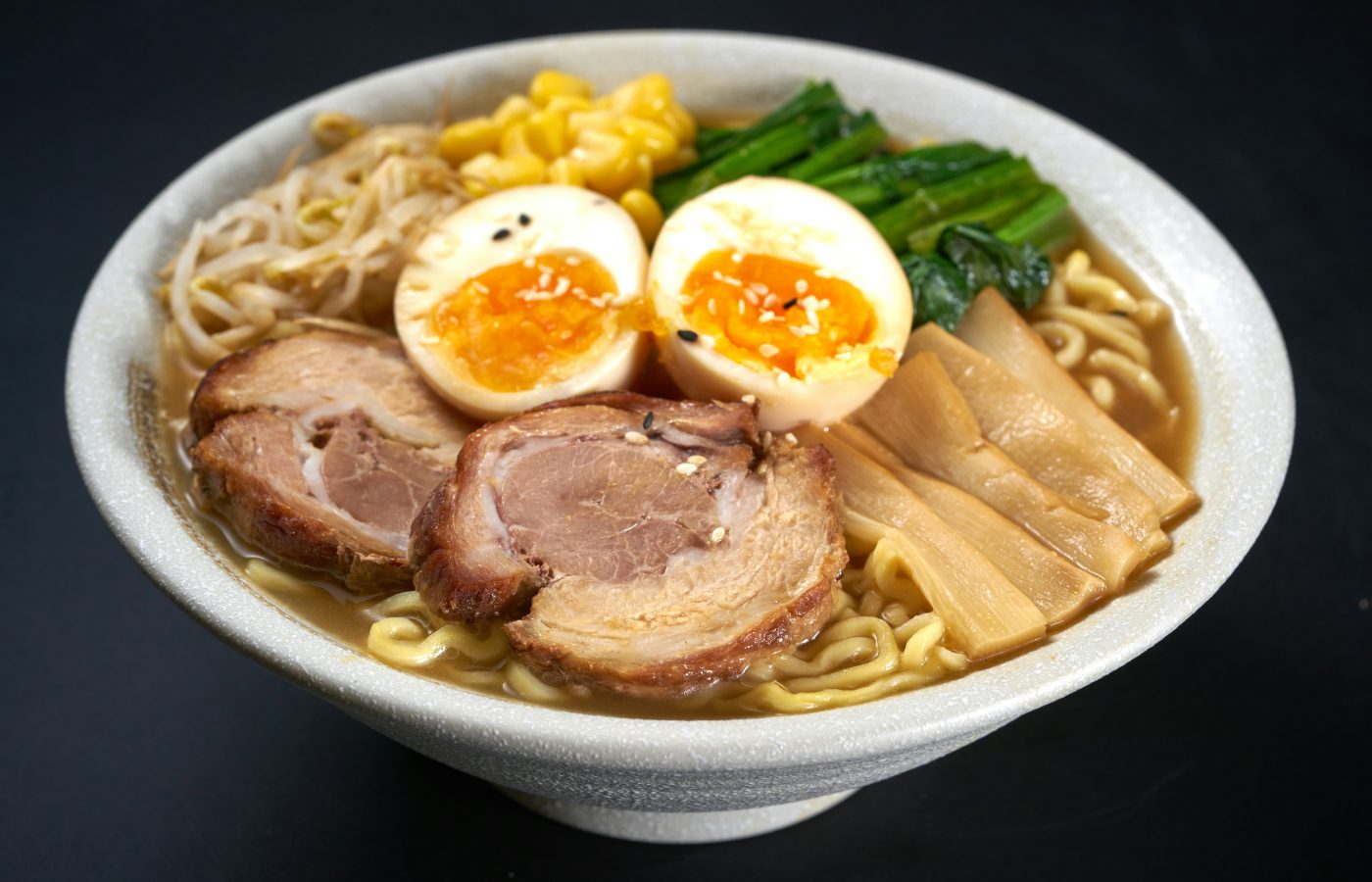
🍜 Japanese noodle soup · 🍲 Slow-built broth · 🇯🇵 From Japan · 🧪 Umami science
A steaming bowl of ramen looks simple: noodles in soup. But look a little closer, and a really good bowl of ramen is one of the most carefully built foods in the world — layer upon layer of flavour, texture and warmth. We met one on our travels at XU Noodle Bar in Eindhoven, and it sent us off to investigate exactly what makes a bowl of ramen work.

🥢 Ingredient Detective · Kombu
What’s actually in a bowl of ramen?
A classic bowl is built from four main parts, and each one is doing a job:
- 🍜 Noodles — springy wheat noodles, the heart of the bowl.
- 🍲 Broth — the hot liquid, often simmered for hours.
- 🧂 Tare — a concentrated seasoning base (often soy, salt or miso) that flavours the broth.
- 🥚 Toppings — things like sliced pork, a soft egg, spring onion, seaweed or bamboo shoots.
Change any one of those and you get a different bowl. Ramen isn’t a single recipe — it’s a system that cooks build in layers.
🍲 Kitchen Science · Nori
Why is ramen broth so tasty?
A good broth is often simmered for a long time so that flavour and body move out of the ingredients and into the liquid. Some rich, cloudy broths are made from bones — and here’s a familiar face: those bones contain collagen, the same connective-tissue protein we met in our slow cooker. With long, gentle cooking, collagen turns into gelatin, which gives the broth a silky, almost sticky richness that coats the noodles. Broth also carries lots of umami — that deep, savoury taste. So a bowl of ramen is really a bowl of slow, patient chemistry.
🍜 Kitchen Science · Nori
Why are ramen noodles so springy and yellow?
Ramen noodles aren’t quite like ordinary pasta. They’re made with a special alkaline mineral water called kansui, which changes the wheat dough — giving the noodles their springy, chewy bite and their slightly yellow colour. If that idea sounds familiar, it should: we met alkaline treatment before, when maize is turned into masa for our corn tortillas through nixtamalisation. Two completely different foods, on opposite sides of the world — both transformed by a little alkaline chemistry.
👅 Taste like a cook
How to taste a bowl of ramen
Next time you have ramen, slow down and investigate before you dive in. Try to notice: 👃 aroma — what rises up in the steam? 🍲 the broth — is it light and clear, or rich and cloudy? 🧂 seasoning — salty, savoury, deeply umami? 🍜 the noodles — springy, chewy, soft? 🥚 the toppings — how does each one change a mouthful?
A great bowl is all about balance — the broth, the tare, the noodles and the toppings working together. Tasting the parts separately, then together, is exactly how a cook learns to build one.

🌏 Geography Stop · Bamboo & Twig
Where does ramen come from?
Ramen is Japanese — but its story begins with Chinese-style wheat noodles that arrived in Japan, where cooks made the dish their own. Today Japan has wonderful regional styles: 🍜 Sapporo in the cold north is famous for rich miso ramen; 🐷 Fukuoka is known for creamy, pork-bone tonkotsu; and 🗼 Tokyo for a soy-flavoured shoyu broth. Different cities, different weather, different bowls — geography you can taste.
🗣️ Language Stop · Bamboo & Twig
The words on the menu
The word ramen is generally thought to come from Chinese words for noodles, travelling into Japanese along with the dish. And once you know a few menu words, you can almost order by flavour: shoyu means soy, shio means salt, miso is fermented soya bean paste, and tonkotsu means pork bone. So a menu isn’t just a list — it’s a little map of how each bowl is built.

🔢 Maths Mission · Sunny
Build-a-bowl combinations
Imagine a ramen shop offers 3 broths (shoyu, shio, miso), 2 noodle thicknesses (thin or thick) and 4 toppings to choose one of (egg, pork, sweetcorn or extra spring onion). How many different bowls could you build? (Clue: multiply the choices together — 3 × 2 × 4.) Now invent one more broth. How many bowls are possible now? You’ve just discovered how quickly a few simple choices multiply into a whole menu.
🧠 Food History · Bamboo & Twig
From a noodle bowl to a global phenomenon
Ramen grew hugely popular in Japan over the twentieth century, especially as an affordable, warming, everyday meal. Then in 1958 an inventor named Momofuku Ando created instant ramen — dried noodles you could cook in minutes with just hot water. It changed how the whole world ate: instant noodles travelled into homes and shops across the planet. So ramen now lives in two worlds at once — the careful, slow‑simmered bowls of a ramen shop, and the quick packet in a kitchen cupboard.
🌏 Around the world with ramen
From those beginnings, ramen has spread everywhere. Specialist ramen shops now open in cities all over the world, each with their own broths and toppings, while instant noodles are eaten in enormous numbers on every continent. Wherever it goes, ramen adapts — new flavours, local ingredients, different toppings — while keeping that same comforting idea at its heart: noodles, broth, seasoning and care, in one warm bowl. Which is exactly the bowl we found waiting for us in Eindhoven.
🍜 Where we met ramen
We first slurped our way into this story at XU Noodle Bar in Eindhoven, where a warm bowl of chicken ramen turned into a whole investigation — broth, noodles, umami and a trail leading all the way back to Japan. Not bad for a simple bowl of noodles in soup.
🏅 Ramen badges
🧾 Your ramen log
- Dish: Ramen
- Type: Japanese noodle soup
- Four main parts: noodles, broth, tare, toppings
- What makes the noodles springy: kansui (alkaline mineral water)
- What makes the broth rich: long cooking + collagen becoming gelatin
- A style I’d like to try: ______________
- The coolest thing I learned was: ______________
🚀 Where could this dish take us next?
One bowl of noodles has taken us into slow‑simmered broth chemistry, alkaline noodles, umami, Japanese geography and the invention of instant noodles. There are plenty of trails to follow: we could investigate other alkaline‑treated foods, discover what umami really is, compare fresh and instant noodles, or explore the regional ramen styles of Japan one warm bowl at a time.