Food Stories
Tamarind
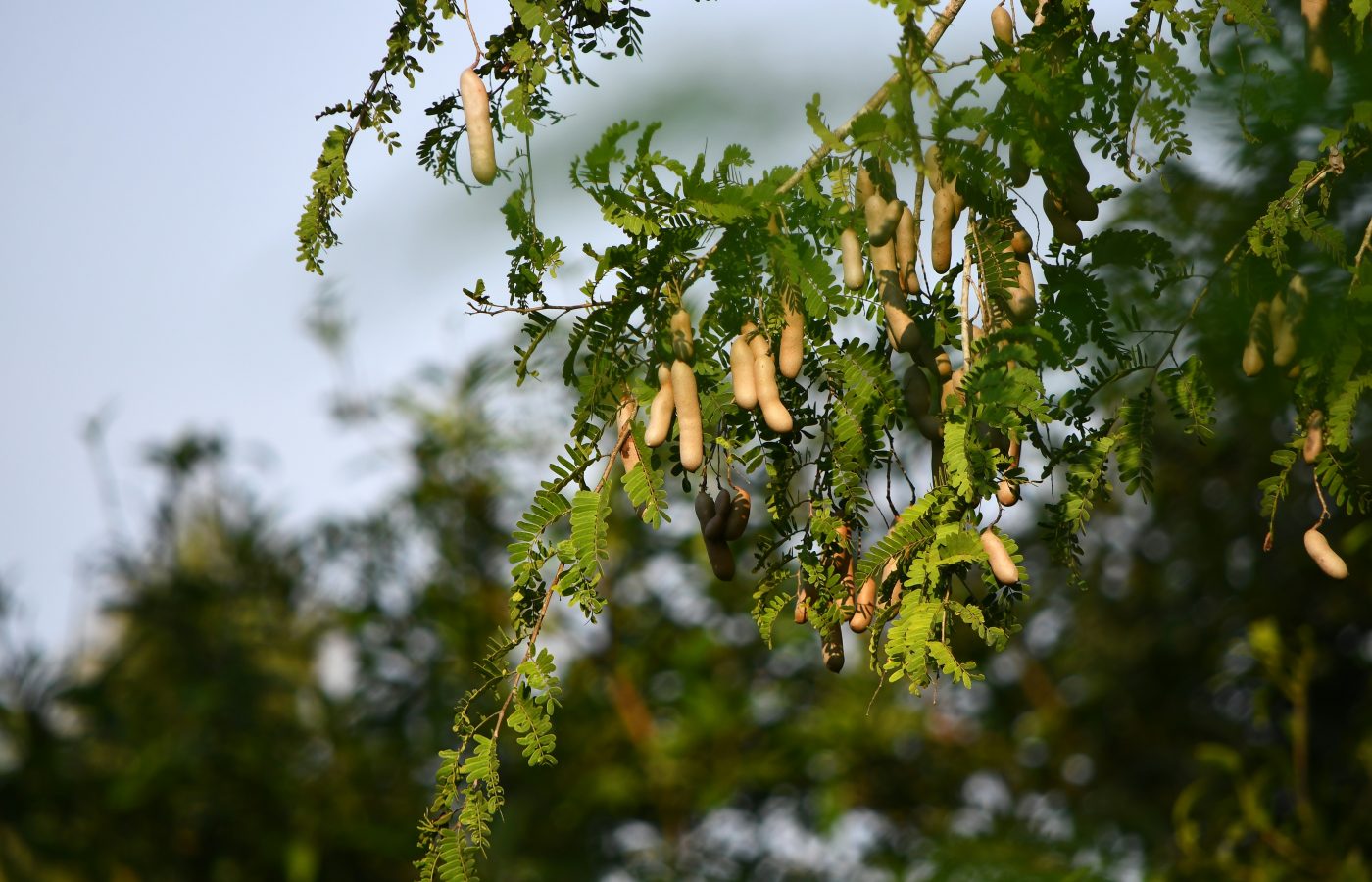
It looks like a giant brown bean, grows on a tropical tree and tastes somewhere between a lemon, a date and a very sour sweet. Meet tamarind — the fruit hiding inside our Pad Thai sauce.
🌱 Fruit · 🌍 Tropical origins · 👅 Sweet & sour · 🔎 Easy to investigate

🕵️ Ingredient Detective · Kombu
What exactly is tamarind?
Tamarind is the fruit of a large tropical tree called Tamarindus indica. Its fruit grows inside long, slightly curved brown pods. Crack open a ripe pod and you’ll find a sticky brown pulp wrapped around hard, shiny seeds.
It might not look particularly exciting, but that brown pulp is packed with flavour — sharply sour, fruity and slightly sweet all at once. That’s why just a spoonful can completely change a dish.
Detective challenge: if you can find whole tamarind pods, examine one before opening it. Is the shell hard or soft? How many seeds are inside? What does the pulp smell like before you taste it?

🌍 Geography Stop · Bamboo & Twig
Tamarind has travelled a very long way
The name Tamarindus indica sounds as though the tree must come from India. There’s a surprise: tamarind is generally thought to have originated in tropical Africa. People carried and cultivated it across enormous distances, and it became established in India and other parts of Asia many centuries ago.
Today you’ll find tamarind in foods across South and Southeast Asia, Africa, the Middle East, Mexico, Central America and the Caribbean. So the tamarind in our Thai Pad Thai is part of a much bigger food story.
Map mission: find Africa, India and Thailand on a map. How might people and ingredients have travelled between them before aeroplanes existed?
🗣️ Language Stop · Bamboo & Twig
A name that travelled too
The English word tamarind has travelled through languages just as the fruit travelled between countries. It ultimately comes from the Arabic expression tamr hindi, meaning “Indian date.” European travellers met the fruit through trade, and the name gradually became tamarind.
But remember our detective work: a name suggesting India doesn’t necessarily mean that’s where the plant first evolved. Food names can preserve clues about trade, travel and what people once believed.
👅 Taste like a cook
Why is tamarind so sour?
Taste a tiny amount of tamarind paste on its own. Quite a shock compared with the finished Pad Thai, isn’t it? Tamarind naturally contains organic acids, including tartaric acid, which give it that characteristic sour taste — and our tongues detect acidity as sourness.
That doesn’t mean sour ingredients are bad. Cooks use acidity deliberately, because it can make other flavours seem brighter and stop rich or sweet dishes tasting heavy. In our Pad Thai we balanced:
🍋 Sour — tamarind & lime · 🍬 Sweet — sugar · 🧂 Salty — fish sauce
None needs to disappear. The trick is getting them to work together.
Tiny taste experiment: put three tiny portions of diluted tamarind paste into separate dishes. Leave the first alone. Add a small pinch of sugar to the second, and a little more to the third. Taste them in order. Did the tamarind actually stop being acidic — or did the sweetness change how you perceived the sourness? Welcome to sensory science.

🧪 Kitchen Science · Nori
Sour isn’t the same as pH
We often use “sour” and “acidic” as though they mean exactly the same thing, but they aren’t quite identical. pH is a chemical measurement related to acidity. Sourness is a sensation created when our taste system responds to acids in food.
Two foods can have similar acidity but not taste equally sour, because flavour is also affected by sugars, aromas and other compounds. That’s why cooks do something extremely sophisticated without any laboratory equipment: they taste. When you adjusted the Pad Thai sauce, you were making a sensory measurement with your own body.
🌳 Plant Explorer · Kombu
From flower to pod
Tamarind belongs to the legume family, Fabaceae — the same enormous plant family as peas, beans, lentils and peanuts. Look at a whole tamarind pod and the relationship suddenly makes more sense.
The tree produces flowers, which develop into pods. Inside each pod are seeds surrounded by the edible pulp we’re interested in. So although we use tamarind like a sour flavouring, botanically we’re eating part of a fruit.
Plant detective: compare a tamarind pod with a pea or bean pod. What similarities can you spot? What looks completely different?
🧺 Market Mission · Kombu
Whole pod, block or jar?
You may meet tamarind in several forms. Whole pods let you see the actual fruit. Compressed pulp or blocks contain the pulp and may need soaking and straining before cooking. Paste or concentrate is convenient because much of the preparation is already done.
But there’s a catch: different tamarind products can have very different strengths. One tablespoon from one jar may taste far more concentrated than a tablespoon from another. That’s why our favourite kitchen instrument appears again — your tongue. Add a little, taste, and adjust.
🍜 Around the world with tamarind
Thailand isn’t the only country that discovered how useful this strange sour fruit can be.
- In India, tamarind appears in chutneys, sauces, curries and drinks.
- In Thailand, it helps create the sour part of dishes including Pad Thai.
- In Mexico, tamarindo is used in drinks, sweets and snacks.
- Across parts of the Caribbean, tamarind is made into drinks, sauces and confectionery.
- And in Britain, you may have eaten tamarind without realising it — it’s one of the ingredients traditionally used in Worcestershire sauce.
One fruit. Lots of cuisines. Completely different results.
🧠 Food History · Bamboo & Twig
Ingredients don’t respect borders
It’s tempting to put foods into neat boxes: Thai food belongs to Thailand, Indian food to India, Mexican food to Mexico. Real food history is much messier — and much more interesting.
Plants move. People migrate. Merchants trade. Empires expand and disappear. Recipes change. Local cooks take unfamiliar ingredients and turn them into something new. Tamarind’s journey from its probable African origins into cuisines across Asia and eventually much of the tropical world is a good reminder that food can be a map of human history.
🔬 Kombu’s Investigation
Can you recognise tamarind?
Next time you visit a supermarket or international food shop, see how many different tamarind products you can find. Look for:
- whole tamarind pods
- tamarind pulp
- tamarind paste
- tamarind concentrate
- tamarind sweets
- tamarind drinks
- sauces containing tamarind
Don’t buy everything! Photograph or write down what you find and check which countries the products come from. How far has our ingredient travelled this time?
⭐ Ingredient badges
🧾 Your ingredient log
- Tamarind tastes like: ______________
- I found it as: ______________
- The product came from: ______________
- The most surprising thing I learned was: ______________
- A dish I’d like to try it in next: ______________
🍜 Where we met tamarind
We first met this strange little fruit while making Chicken Pad Thai in Thailand. There it joined fish sauce, sugar and lime to teach us one of the most useful lessons in cooking: great flavour isn’t always about adding more — sometimes it’s about finding the balance.